Time for Jamaat and Shibir to Die
K S T Qureshi
Bangladesh Jamaat-e-Islami (“Jamaat”) and its student wing, Islami Chhatra Shibir (“Shibir”), stand today as some of the most enduring political organisations in the country’s history. Their organisational discipline, ideological clarity and grassroots networks have often been cited as strengths. However, these strengths have also been overshadowed by a fundamental refusal to confront and resolve the most painful chapter of their political legacy, which is their role in the Liberation War of 1971. This unresolved contradiction has left both organisations suspended in a kind of political paralysis, unable to evolve meaningfully in a democratic society that is moving forward. The issue at hand is not religion or religious politics. Islam, like other major world religions, has inspired countless political movements across time and space, many of which have contributed positively to democratic processes, social justice and ethical governance. The problem with Jamaat lies not in its religious inspiration, but in its historical position during one of the most defining moments in Bangladesh’s nationhood and its subsequent unwillingness to reckon with that history. Moreover, Jamaat prescribes to so-called Moududiism whereas mainstay of the Muslim population in Bangladesh proscribe it.
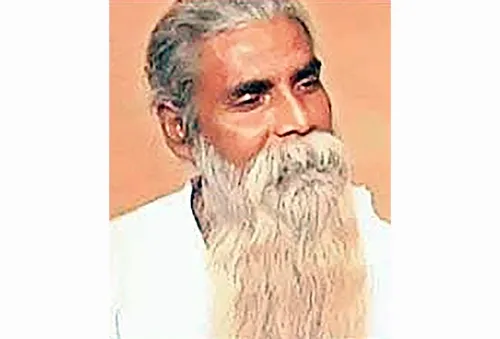
During the 1971 Liberation War, the then East Pakistan chapter of Jamaat aligned itself with the Pakistan military regime. Elements associated with Jamaat played active roles in forming and supporting armed paramilitary groups such as Al-Badr and Al-Shams, which were responsible for atrocities against civilians and freedom fighters. This role has been documented in numerous local and international studies and was reaffirmed during Bangladesh’s War Crimes Tribunal process. Whether due to ideology, geopolitics or misjudgement, Jamaat’s leadership chose the wrong side of history. That legacy cannot be erased through silence or selective memory. What has made matters worse is the party’s persistent reluctance to offer a full, unambiguous and unconditional apology or to sever institutional ties with those directly responsible for wartime crimes. Over the years, various voices, even from within Jamaat itself, have urged the leadership to acknowledge past mistakes and reimagine the party for a new era. Among them was Barrister Abdur Razzaq, a senior figure who publicly resigned in 2019 after unsuccessfully trying to convince the leadership to formally apologise for its 1971 role and start anew. His departure highlighted a generational and strategic divide within the party, particularly between those willing to reform and those determined to maintain continuity with the past.
In this regard, Jamaat and Shibir differ significantly from other religiously inspired political parties across the world. Take, for instance, Germany’s Christian Democratic Union (“CDU”), which is a party rooted in Christian social teaching. The CDU has played a central role in rebuilding post-war Germany as a modern democracy. Despite drawing on religious values, it explicitly rejected the fascist and extremist ideology of the Nazi period. The CDU promoted social market economics, European integration, and constitutional governance, all while maintaining an ethical framework inspired by Christianity. Crucially, it never attempted to rehabilitate or justify the horrors of Germany’s past. Instead, the German state and society confronted their history through public apologies, education reforms and democratic institution-building. The lesson here is not that religious values must be removed from politics, but that historical accountability is essential to moral and political legitimacy. Jamaat, by contrast, has failed to make this transition. Its refusal to re-evaluate its past has prevented it from becoming a credible actor in Bangladesh’s contemporary political arena. The same can be said for Shibir, whose reputation as a student organisation remains marred by associations with Jamaat and its political violence and ideological extremism.
Today’s Bangladeshi society is vastly different from that of the 1970s or even the 1990s. It is younger, more urban, more connected to global trends, and increasingly focused on economic development, digital advancement, and social inclusion. In this environment, political organisations are judged less by ideological purity and more by their ability to deliver constructive change. Jamaat and Shibir, burdened by the weight of their history and resistance to reform, find themselves disconnected from these emerging priorities.
While Jamaat may appear to command a growing reservoir of support, particularly in recent years amidst political disillusionment and economic dissatisfaction, it is imperative to scrutinise the nature and breadth of this support. A vast proportion of Jamaat’s base remains concentrated in the rural periphery, drawn largely from poverty-stricken and religiously-inclined segments of society. These communities, while earnest in their convictions, are characteristically disconnected from the levers of institutional power and lack both the organisational sophistication and socio-political capital to effect systemic change or assert influence over the state apparatus. Their loyalty to Jamaat may be deep, but it is demographically narrow and strategically constrained.
Crucially, Jamaat’s support does not emanate from a cross-section of the nation’s diverse population. It has little resonance within the urban middle classes, intellectual circles, or the technocratic elite, these sectors are essential for governing a complex modern state. Nor has it been able to galvanise significant student, professional, or cultural constituencies outside its traditional religious networks. In this regard, its mobilisation capacity remains inherently limited. Popular support, in and of itself, is not a sufficient condition for national leadership; it must be broad-based, representative and adaptable. Jamaat’s rural grounding may provide electoral pockets of strength, but without ideological renewal and societal integration, it cannot plausibly claim to be a national movement capable of steering the country’s future. If these organisations are truly committed to public service and ethical leadership, they must take the courageous step of organisational transformation, and it will require them to have political “death and rebirth”, not in theological terms, but in institutional, moral and pragmatic ones. Jamaat and Shibir, in their current form and with their current names, are unlikely to regain national legitimacy. Their continued association with 1971 has made them toxic to most of the electorate, regardless of their social work or ideological intentions.
One possible path forward would be for Jamaat’s leadership to formally dissolve the party and allow for the emergence of a new political platform, which retains moral values and ethical purpose, but is free of the burdens of historical guilt. The new party should avoid names or terminologies that echo past controversies. A name like People’s Justice Alliance or National Renewal Platform would project an image of inclusivity and forward-thinking. Likewise, a student wing titled United Student Initiative or Campus Ethics Forum could appeal to younger generations hungry for both purpose and pragmatism.
Jamaat must engage in serious introspection in light of the events that unfolded in post-revolution Egypt, particularly the rise and abrupt fall of President Mohamed Morsi and the Muslim Brotherhood government. The Brotherhood, after decades of political marginalisation, ascended to power through democratic means following the 2011 revolution. However, despite their electoral legitimacy, they lacked the institutional grounding, political inclusivity, and strategic finesse necessary to govern a pluralistic and volatile society. Within a year, Morsi was overthrown in a military-backed coup amidst widespread unrest and accusations of authoritarian overreach and ideological inflexibility. For Jamaat, the Egyptian experience should serve as a sobering lesson. Even if, by some extraordinary turn of events or electoral fortune, the party were to gain a mandate to form a government in Bangladesh, its ability to sustain that power would remain gravely uncertain. The combination of deep public mistrust, historical baggage, and the absence of a broad-based political coalition would almost certainly render such a government hazardous from the outset. In all likelihood, it would face severe institutional resistance, social polarisation, and possible intervention before it could even consolidate authority. Without meaningful reform, ideological moderation and national reconciliation, Jamaat risks not only political irrelevance, but also repeating the tragic arc of the Brotherhood, i.e. from triumphant emergence to abrupt ejection.
In many democracies, parties have rebranded or even completely dissolved in order to align themselves with new political realities. In Italy, post-fascist parties evolved into mainstream conservative platforms. In Germany, the CDU and other centrist parties helped integrate a Christian moral framework within a democratic constitutional order, without invoking religious authoritarianism or historical denial. Such a reformation would not be without precedent. There is no reason why a Muslim-majority democracy like Bangladesh cannot see similar evolutions within its own political sphere. Of course, such change would require courage, humility and vision. It would also require a generation of leaders willing to prioritise the future over the past. This is not a betrayal of one’s religious convictions or principles; rather, it is a reaffirmation of them in a way that serves justice, peace and the national interest. Islamic values of justice (adl), truth (haqq), and repentance (tawba) can serve as guiding principles for this transformation.
In conclusion, the question is not whether Islam has a place in politics, but clearly, it does and always will in a society where religion is central to people’s lives. The real question is whether political actors inspired by Islam can show the moral leadership necessary to reconcile with history and rebuild trust. Jamaat and Shibir still have that opportunity, but the window is closing. If they do not act now, and if they do not dissolve, reform, and re-emerge with new names, new faces, and new ideas, they risk permanent irrelevance. Their survival depends not on stubbornness but on transformation. Let them learn from history, from Germany, from their own internal voices. Let them choose dignity over denial, future over nostalgia and justice over legacy. Only then can they hope to participate again in Bangladesh’s democratic journey, not as relics of a contested past, but as contributors to a shared and inclusive future.